Who’s at the airport? But also… why?
Humans have experienced motorised flight (successfully, without falling off the Eiffel Tower or going up in flames) first-hand for only 123 years, since the Wright Brothers flew over the sand of the the Kill Devil Hills in Kitty Hawk, North Carolina. Since then, a massive aviation industry has emerged, employing hundreds of thousands of pilots, cabin crew, engineers, chefs, schedule planners, air traffic controllers, and even sheep, in almost every country in the world. But what do people feel when they’re at the airport? Are they still themselves, or have they become something else entirely?

The lawnmowers at Mainz-Finthen Airfield, April 2026
Most commonly, we associate being at an airport with a sense of self-imposed dread. We just want to get from A to B without any bumps or bruises, to the body or the ego, and ideally on time. The stress of standing in line to check in, go through security, pass any exit controls, grab an overpriced coffee and board the plane all contributes to a sense of tunnel vision, even before you get on the metal tube that will hurtle you across land and sea to your destination. This imagination of the airport experience, however, is just one part of the wider ecosystem that emerges through the presence of an airport in any given location. Aviation has unleashed new social relations, behaviours and economic dependencies that give shape to identities and memories in ways that mostly go unseen. It took a global pandemic and the subsequent disruptions to air travel to see just how vital this ability to connect quickly and securely is to our everyday lives.
While modern airports tout their many amenities to mitigate the stress of travel, what they in many instances fail to do is to highlight the communities in which they exist and the communities that exist within and around them. The opening of Frankfurt Airport’s long-awaited Terminal 3 in April 2026 provides an opportunity to see the excitement that flashy new projects bring while underscoring the diversity of characters and companies that saw to it to deliver a terminal on time and within budget. (Berlin cannot say the same about its own airport!)

The new FRA sign outside Terminal 3, Frankfurt Airport, April 2026
Terminal 3 calls into question the Frankfurt-ness of Frankfurt Airport. While its gleaming windows provide the perfect view of the city skyline, almost nothing in the new terminal screams, “Herzlich willkommen, you’re here!”. Instead, a gyrating series of what look like donuts-cum-vacuum filters floats over the new departures board like an alien pastry, devoid of any content that ground the airport in its home turf. The black, stone, grey and concrete accents don’t remind you that the airport itself exists in the middle of the massive Frankfurt City Forest (Frankfurter Stadtwald), itself caressed by the Main River to the north and the Rhine to the west. There are no Bembel patterns or Ebbelwoi stands selling Kartoffelpuffer with Grie Soß, no quotes from Goethe or Adorno, no timber-framed façades to remind you at all of the culture that surrounds the airport. Instead, you are served a brutal lesson in German coldness coated in the supposed efficiency of automation and digitalisation. You are nowhere in particular. (But hey, the view from the J gates towards the city is okay!)
Exactly this issue serves as the opening vignette to French anthropologist Marc Augé’s 1995 treatise, Non-Places. In the first few pages, Augé presents the fictional character of Pierre Dupont, a white, upper-middle-class business traveller on his way from Charles de Gaulle to Kai Tak, Hong Kong’s infamous harbourside airport, now turned into a sports and entertainment district. Dupont drives over the drab motorway to CDG and skims through the drab terminal as he skims through the drab in-flight magazine while he flies over Dubai and Bombay from the comfort of an Espace 2000 recliner. These moments of mobility take place in what Augé calls “non-places”, spaces in which we lose our sense of self by entering some contractual relationship with the airport operator or the airline and simply become “a passenger”. While this may still ring true in megahubs like London Heathrow, Frankfurt, LAX or even the new Hong Kong airport, this view ignores the other characters who inhabit the airport environment. It also ignores the fact that other kinds of airports are out there.
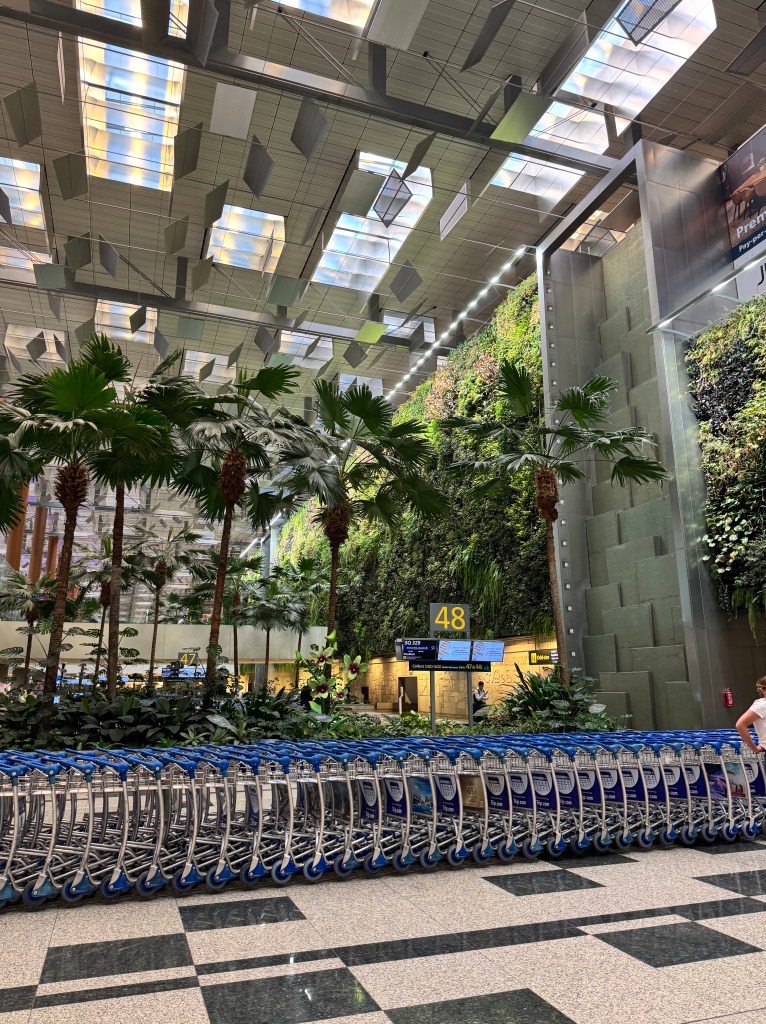
Baggage claim at Terminal 3, Singapore Changi Airport, February 2026
How place-y can a “non-place” be?
My new research project picks up where Augé leaves off and examines not online the intricate layered relations that exist within the confines of a commercial airport but also considers smaller sites where general aviation rules the day. Having grown up in a “flying family” – hell, I wasn’t even two days old the first time I flew in my dad’s Piper… long story – I’m intrigued by the communities that emerge simply because an airfield exists. Be it environmental protection officers who help run the gliding school on weekends, pilots who fly in to certain airports just for a meal (an offence against nature of which my family is very guilty!), or the managers and pencil pushers who keep an underfunded, understaffed airfield up and running, there is much more to be said about aviation that the social sciences, and particularly cultural studies, has overlooked.
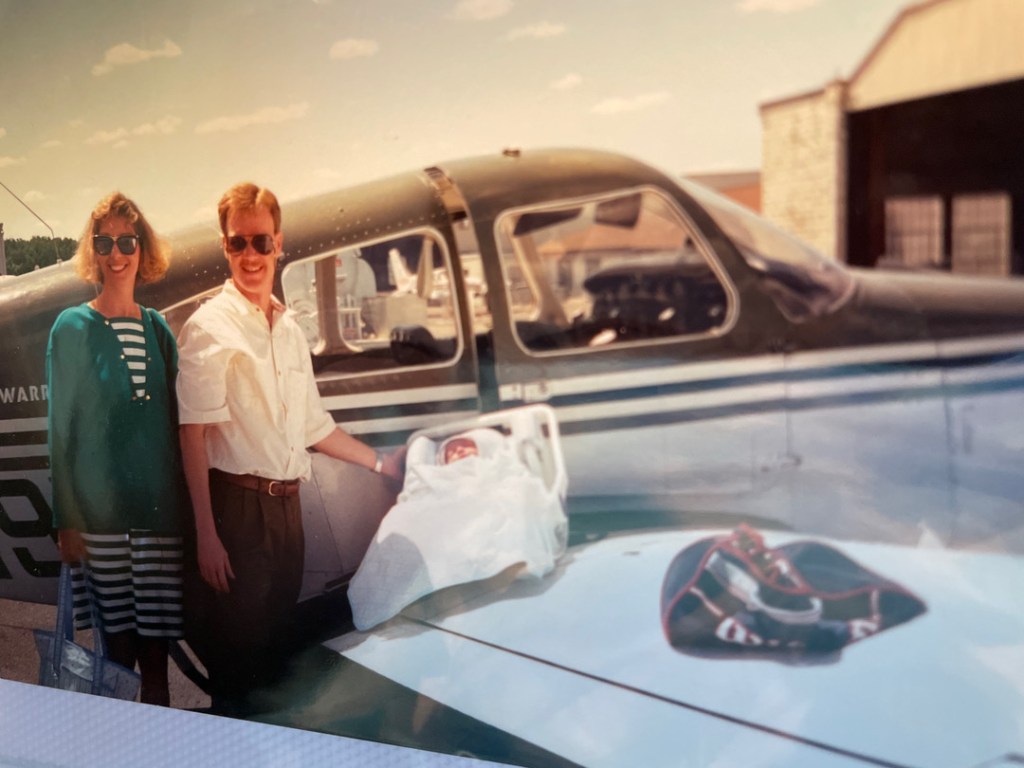
My first flight, June 1992
Where this journey goes is still uncertain, but I’ve started interviewing actors across all backgrounds at a local airfield near me (once an American military strip that hosted concerts of some of the world’s most famous rock bands of the 1980s) and participating in a range of activities, from fly-ins to gliding school to open field days, to observe what communities exist and how they interact with one another and with the natural environment around them. The initial findings signal a sort of effervescence that warrants a closer look at the role of aviation amidst climate breakdown, human–animal relations of all sorts, and the redefinition of “third place”, among many other facets of everyday life at an airport.
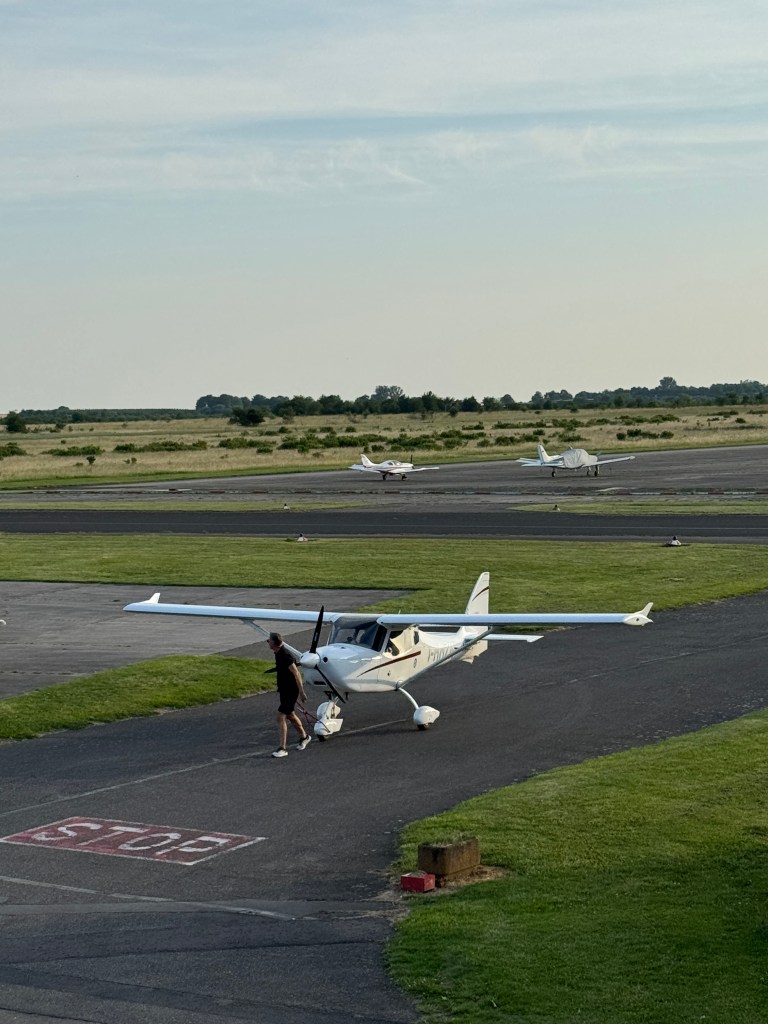
Just walking the plane, as one does…

